
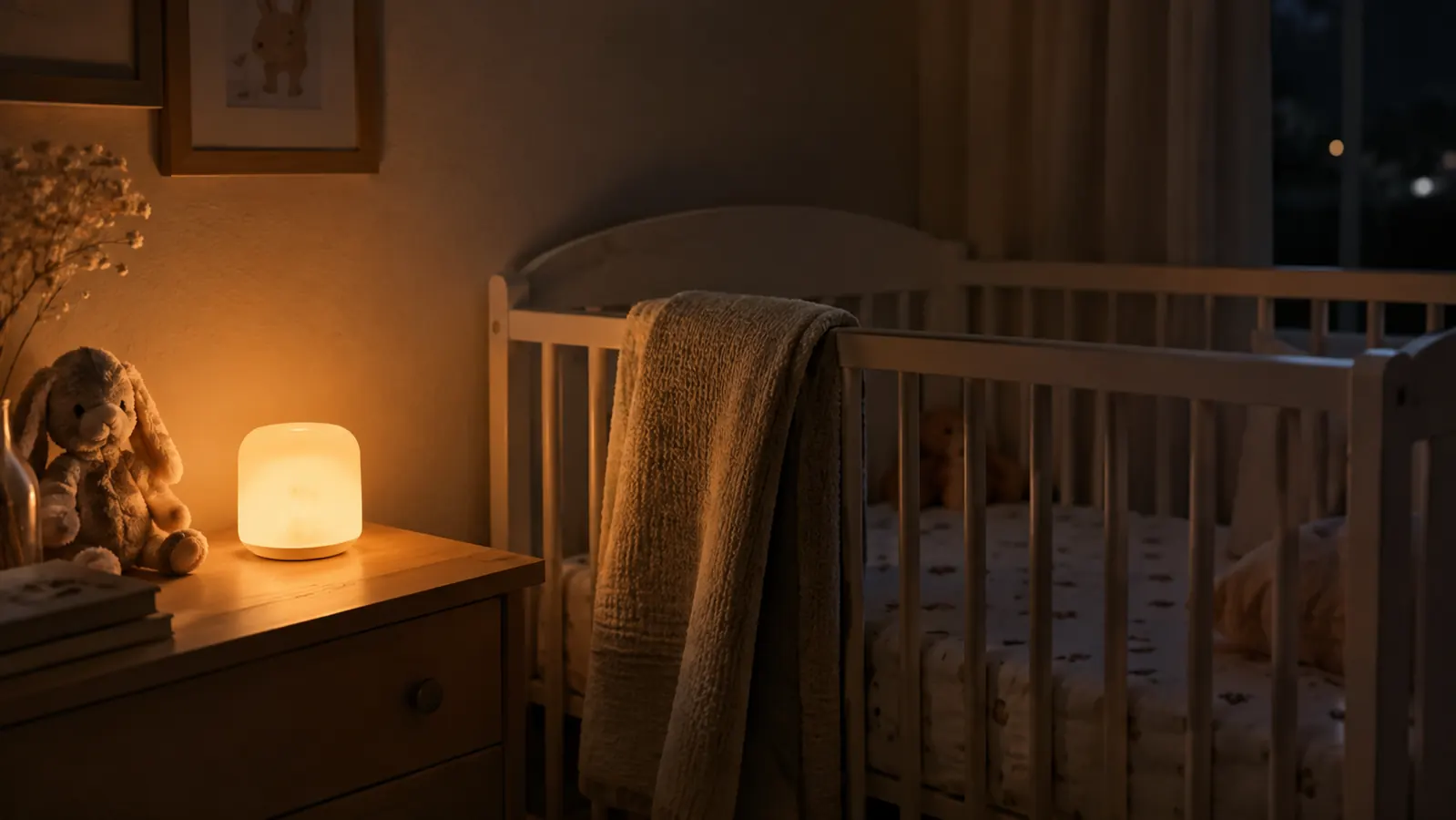
The first time I really understood how much a good night routine mattered was when June was about four months old. Mike and I had spent weeks doing the same dance: feed, change, rock, and pray she would stay asleep. Some nights it worked beautifully. Other nights she was wide awake at 3 a.m., and so were we, staring at the ceiling and trying to remember what sleep felt like.
A friend had been telling me for months to try a sound machine. I kept putting it off because I figured June would sleep when she was ready, and no gadget was going to change that. Then Eli started kindergarten, Biscuit started barking at the bus, and our house got a lot louder at the exact hours June needed quiet. The dog is a 9-year-old yellow Lab, and he means well, but he does not understand naps.
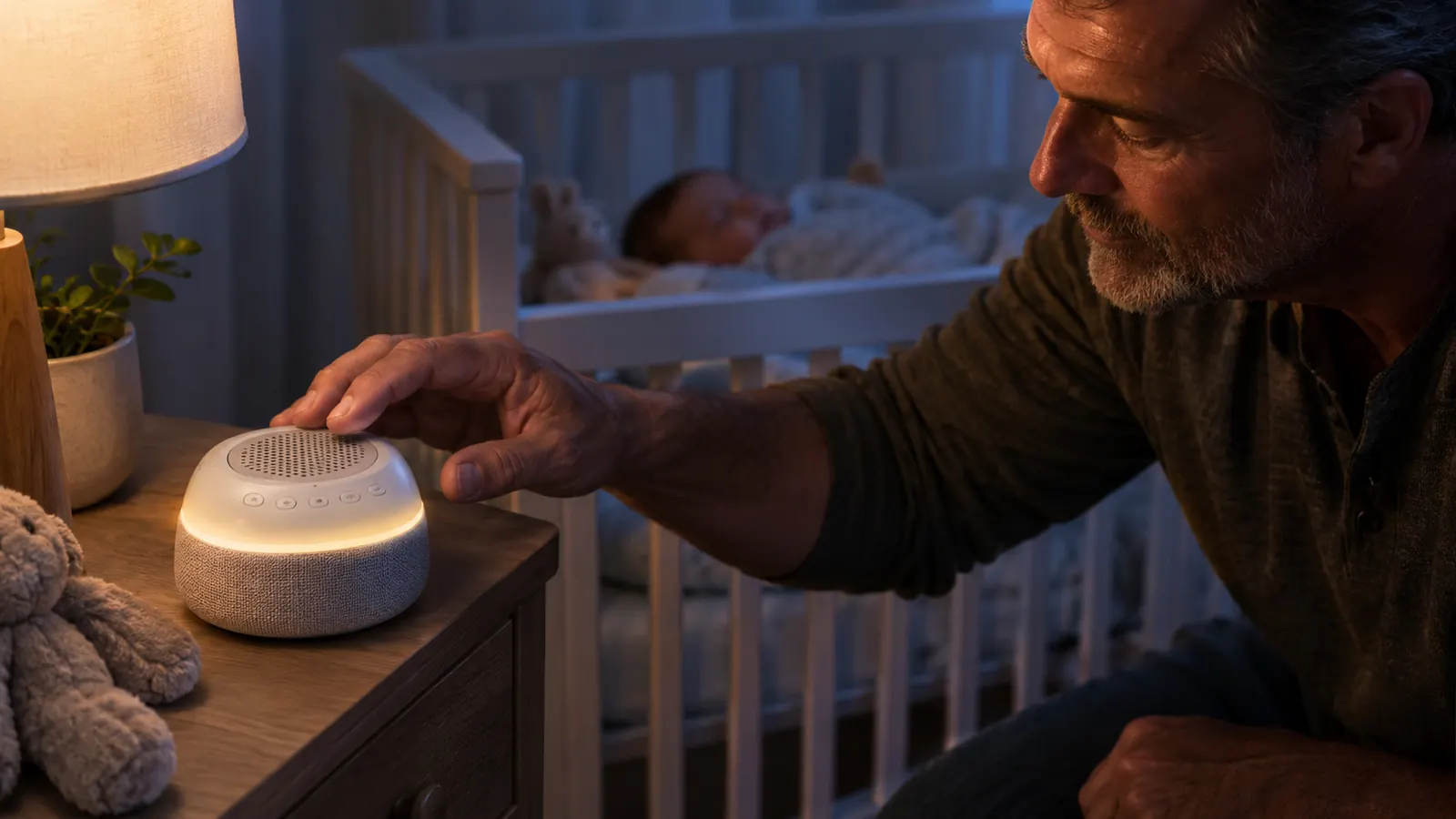
I finally ordered the Hatch Baby Rest after a particularly rough week. It arrived on a Tuesday, I set it up in the nursery that same afternoon, and I wish I had done it sooner. Not because it made June sleep through the night on night one. It did not. But it gave us something we had lost somewhere between the feedings and the laundry: a repeatable routine.
For anyone who has not seen one, the Hatch Baby Rest is a sound machine, a night light, and a routine builder in one small unit. You control it from your phone, which sounded like one more app to me at first. What I found instead was a tool that made the bedtime process easier for Mike and me, and clearer for June.
Before I go further, I want to say the part that matters most. No sound machine replaces safe sleep basics. June sleeps on her back, on a flat firm surface, with nothing loose in the sleep space. The Hatch Baby Rest is a comfort tool, not a medical device. If you have any questions about sleep safety, talk to your pediatrician. That is the advice I would give any new parent, and it is the advice I followed myself.
We started with the simplest routine. White noise at a low volume, a soft amber light for the story, and then a darker setting once she was drowsy. The app made it easy to change the color and brightness without walking into the room. After a few nights, June started to calm down as soon as she saw the light change. That small cue became the signal that it was time to sleep.
By the third week, June was settling back down in about ten minutes instead of forty. That is the kind of progress that keeps a tired parent going.
A calmer bedtime starts with a consistent cue.
The Hatch Baby Rest gives you a sound, a light, and a routine you can repeat every single night. It worked for our family, and it might work for yours. Check today's price on Amazon.
Amazon Check Today's Price on Amazon →The 3 a.m. part is where the Hatch Baby Rest really earned its place. When June woke up hungry, I could change the color and brightness from my phone without walking into the room and turning on a bright lamp. The dim glow was enough for me to feed her, and the white noise covered the sound of Biscuit shifting in the hallway. When she finished, I set it back to the sleep setting. She went from wide awake to drowsy faster than before, and so did I.

I will be honest about what it did not do. It did not stop teething. It did not make June sleep twelve hours, and I would not trust any product that promised that. What it did was remove the guesswork. The same sound and light every night gave her a cue that it was time to sleep, and it gave us a routine we could repeat even when we were exhausted.
It also made it easier for Mike to take over. Before, I was the only one who knew the exact order of the routine. With the Hatch Baby Rest, the app remembered the settings, and Mike could start the same sound and light from his phone. That meant I could actually sleep through a wakeup now and then, which sounds small but is not small at all when you are eight months into sleep deprivation.
Eli, who is five, also figured out the routine. He liked to change the color at breakfast, so it became a small part of our day rather than another thing to manage. That is the real reason I am writing this: the Hatch Baby Rest did not fix every hard part of having an 8-month-old, but it made the parts we could control feel doable.
If all you need is white noise, a basic machine will do that. The Hatch Baby Rest does more than that, and you have to decide whether the app, the light, and the routine builder matter to you. For us, they did.
What I'd Tell You If We Were Sitting at My Kitchen Table
If we were sitting at my kitchen table, here is what I would tell you. Keep your expectations reasonable. No sound machine replaces safe sleep basics: baby on her back, on a flat firm surface, with nothing loose in the sleep space. Read the manual. Ask your pediatrician if you have questions. And remember that the Hatch Baby Rest is a tool, not a promise. It helps because it gives you a routine you can actually repeat. If you are tired, if the 3 a.m. wakeups are wearing you down, and if you want one less decision to make in the dark, it is worth trying. You can always return it if it does not help your family. That is the honest answer, and it is the one I wish someone had given me.
The routine that made our nights calmer
The Hatch Baby Rest is the one piece of baby gear I recommend to friends who ask about sleep. It is not magic, but it gave us a repeatable routine when we needed one most. Check today's price on Amazon.
Amazon Check Today's Price on Amazon →